close
Choose Your Site
Global
Social Media
High-temperature industrial furnaces demand precise thermal management. Specifying the wrong refractory lining leads to massive energy loss, structural degradation, and extended operational downtime. Engineering and maintenance teams frequently struggle to balance thermal efficiency with mechanical durability. Choosing between flexible blankets, rigid boards, and dense modules requires navigating complex trade-offs involving temperature ratings, mechanical wear, gas velocity, and installation labor. You must evaluate these materials against specific operational stressors. This allows facility managers to engineer a refractory lining that maximizes lifespan and minimizes maintenance frequency.
Ceramic Fiber Blankets offer maximum conformability, rapid thermal cycling capabilities, and high fuel efficiency, but are highly susceptible to mechanical damage and high-velocity gas erosion.
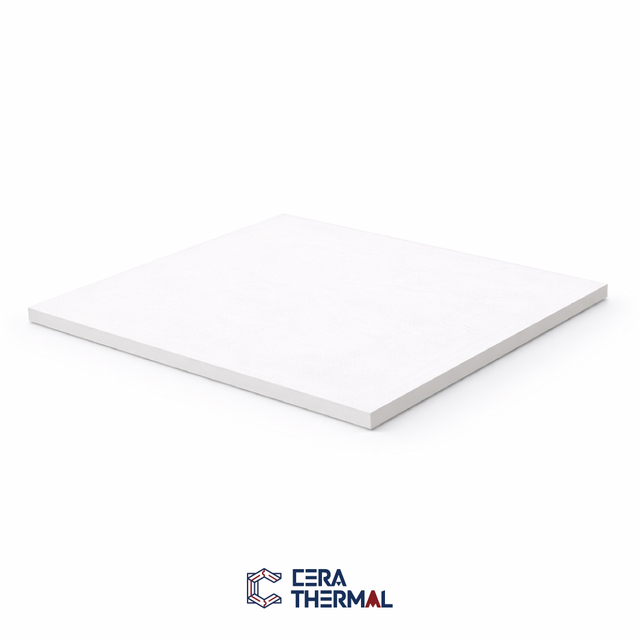
Ceramic Fiber Boards provide rigid, self-supporting structures ideal for backup insulation and areas requiring resistance to direct flame, abrasion, or structural load.
Ceramic Fiber Modules deliver a highly integrated, compact structure with the highest density and resistance to airflow impact, making them the industry standard for heavy-duty, continuous-fire furnace roofs and walls.
Table of Contents
Traditional refractory linings rely heavily on insulating firebrick (IFB) and dense castables. IFB and heavy castables withstand extreme temperatures up to 1650°C and bear heavy structural loads. They possess massive thermal mass. The lining absorbs a tremendous amount of thermal energy before the furnace chamber reaches its target operating temperature. Ceramic fiber offers significantly lower thermal mass and heat storage capacity. This fundamental difference results in faster heating and cooling cycles, superior fuel efficiency, and drastically reduced structural weight on the furnace steel shell. Batch furnaces lined with ceramic fiber complete multiple firing cycles in the time it takes a brick-lined furnace to complete one. A standard heat-treating furnace lined with 9-inch IFB might require 12 hours to reach 1000°C. The same furnace lined with 8-inch ceramic fiber modules hits that temperature in under three hours. This reduction in cycle time increases production throughput. It also reduces the structural steel requirements for the furnace casing, as the fiber lining weighs a fraction of the brick equivalent.
Lower-temperature insulators like fiberglass and mineral wool (Rockwool) work well for commercial applications, HVAC systems, and low-heat industrial ovens. These materials degrade rapidly in high-temperature industrial furnaces. Fiberglass melts or loses structural integrity above 500°C. Mineral wool begins to sinter and shrink severely past 800°C. Ceramic fiber withstands extreme high heat, routinely operating at temperatures up to 1600°C (2912°F). It maintains its physical structure, tensile strength, and insulating effectiveness. Ceramic fibers do not melt under standard furnace conditions. They provide a stable, highly reflective thermal barrier. When replacing mineral wool with ceramic fiber in a 900°C tempering oven, maintenance teams eliminate the frequent repacking required when the mineral wool settles and degrades.
Selecting the correct refractory material requires a rigorous evaluation of the specific furnace environment. Relying on maximum temperature ratings alone results in premature lining failure.
Engineers must establish the continuous operating temperature versus peak temperature spikes. A furnace operating continuously at 1100°C requires a different material grade than one that spikes to 1300°C for short durations. Define the necessary thermal shock resistance and desired heating speed based on the furnace's firing cycles. Batch furnaces require materials that handle rapid expansion and contraction without spalling. Continuous furnaces prioritize long-term thermal stability and low thermal conductivity to minimize shell temperatures. You must map the thermal gradient from the hot face to the cold face. This determines the required thickness and density of the insulation layers.
Assess the internal furnace environment beyond just temperature. High-velocity gas flows from aggressive burners strip fibers from soft linings. Mechanical vibration from surrounding heavy machinery or internal conveyors causes brittle materials to fracture. Physical abrasion from loading and unloading heavy metal parts dictates the need for durable hot-face materials. Exposure to corrosive chemical atmospheres, such as alkali vapors or sulfur compounds, causes devitrification. This process makes amorphous ceramic fibers crystallize, lose their flexibility, and crumble. In petrochemical heaters, sulfur in the fuel reacts with the fibers, requiring specific high-alumina grades to resist chemical attack.
Evaluate the acceptable frequency of maintenance cycles and available downtime for installation. Some linings patch quickly during a short weekend outage. Others require extensive teardowns. Physical space limitations for the lining thickness play a critical role. If the steel casing dimensions are fixed, achieving the target cold-face temperature requires a highly efficient, multi-layered insulation architecture rather than a single thick layer of standard material. You must balance the thermal requirements with the physical footprint available inside the steel casing.
Ceramic fiber blankets consist of high-purity alumina-silica materials. Manufacturers melt the raw materials in an electric arc furnace and spin or blow them into long, flexible fibers. Mechanical needling locks these fibers together to build tensile strength without using organic binders. Because they contain no binders, blankets do not produce smoke or outgas during their initial firing. They come in various densities, typically ranging from 4 to 12 lbs/ft³, and temperature grades up to 1600°C (2912°F). Their exceptionally low heat storage makes them highly fuel-efficient and capable of facilitating very fast heating cycles. The interlocking fibers create thousands of microscopic air pockets, which block thermal transfer effectively at lower temperatures.
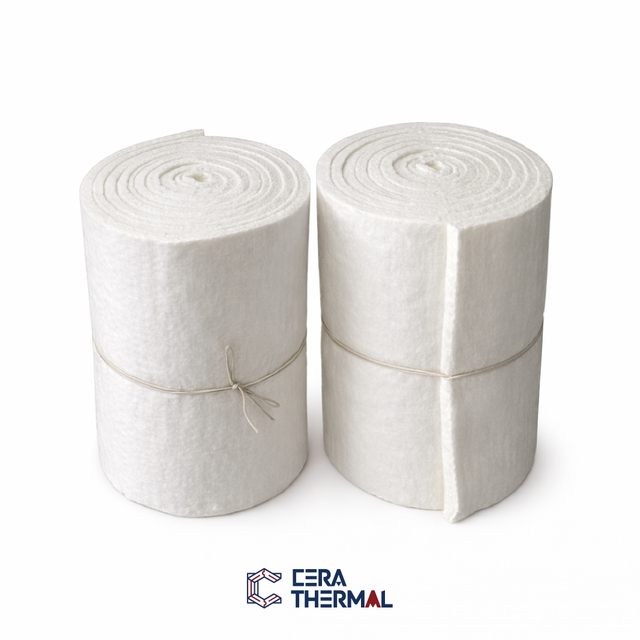
The primary advantage of the blanket format is its flexibility. Installers bend, fold, and compress it to fit irregular spaces.
Wrapping complex geometries, high-temperature pipes, and expansion joints.
Insulating furnace arches and crowns where lightweight conformability and heat retention take priority over structural load-bearing.
Serving as the hot face lining in low-velocity, low-abrasion environments such as annealing furnaces, heat-treating ovens, and hobbyist kilns.
Acting as highly efficient backup insulation layered behind denser refractory materials like firebrick or castables to drop the thermal gradient before it reaches the steel shell.
Packing gaps around burner blocks and sight glasses to prevent heat leakage.
The blanket format has distinct mechanical vulnerabilities. It is highly fragile and easily damaged by mechanical impact, tools, or routine maintenance activities. In high-velocity airflow environments, such as near burner blocks or exhaust flues, the sheer force of the gas causes severe fiber erosion. The gas literally blows the insulation out of the furnace over time. Blankets are prone to thermal shrinkage at high temperatures. If installers do not properly layer, overlap, and compress the material during installation, this shrinkage opens gaps at the joints. These gaps expose the steel furnace shell to direct heat, causing warping or casing failure.
When evaluating a ceramic fiber blanket vs board, the primary differentiator is structural rigidity. Both utilize the same base alumina-silica fibers, but their manufacturing processes yield entirely different mechanical properties.
Ceramic fiber boards undergo a wet vacuum-forming process. A slurry containing ceramic fibers blends with organic and inorganic binders. The manufacturer draws this mixture through a mold under vacuum, extracting the water and leaving a rigid, self-supporting panel. The resulting board has a much higher density—typically between 15 and 25 lbs/ft³—and significant structural integrity compared to needled blankets. This density allows the board to maintain its shape under direct heat, resist minor mechanical stress, and withstand higher gas velocities. The rigid structure prevents the fibers from tearing loose under turbulent airflow.
Boards work best for applications where flexibility is a liability and structural stability is required.
Hot face lining in furnaces with moderate gas velocities where flexible blankets would quickly erode.
Rigid backup insulation behind dense castables or firebrick, providing a flat, stable surface for the heavy hot-face materials.
Applications requiring precise machining, cutting, or structural support. Installers easily saw, drill, and sand boards to create custom baffles, heat shields, burner blocks, and peep hole linings.
Flue and chimney linings where smooth surfaces maintain proper draft and exhaust flow.
Lining the floors of light-duty kilns where they must support the weight of small parts without crushing.
The rigidity of ceramic fiber boards comes with specific trade-offs. They possess lower thermal shock resistance compared to blankets. Rapid and extreme temperature changes cause the rigid structure to crack or spall. They are entirely inflexible and cannot wrap around curved surfaces, pipes, or complex geometries. The organic binders used in the manufacturing process burn out during the initial firing of the furnace. This binder burnout typically occurs between 200°C and 400°C, resulting in temporary smoke, odor emissions, and a slight loss of structural strength. Operators must ensure proper ventilation during the commissioning phase of a board-lined furnace.

Ceramic fiber modules represent the heavy-duty tier of fiber insulation. Manufacturers construct them from pre-compressed, folded ceramic fiber blankets to create a highly integrated and compact structure. During manufacturing, the folded blankets compress under high pressure and band together. Modules feature integrated internal anchoring systems. These metallic anchors embed within the cold face of the module, allowing for direct, secure attachment to the furnace steel casing without exposing the hardware to the extreme heat of the hot face. Module densities generally range from 9 to 15 lbs/ft³, offering a robust barrier against thermal and mechanical degradation. The edge-grain orientation of the folded blankets presents a tough, resilient surface to the furnace interior.
Modules serve as the industry standard for large-scale, continuous-operation industrial environments.
Large-scale industrial furnaces, petrochemical heaters, ethylene cracking furnaces, and heavy forging furnaces.
High-velocity gas environments where airflow impact, particulate abrasion, and mechanical vibration are constant operational realities.
Furnace roofs, flat suspended arches, and massive furnace doors where gravity and mechanical stress require secure, heavy-duty anchoring that will not fail over time.
Zones requiring rapid installation over massive surface areas, as the modular design allows for quick grid-based attachment.
The primary barrier to module implementation is the initial material investment. Installation requires specialized stud welding equipment to attach the internal anchors to the casing. While faster than laying brick, it requires skilled labor to ensure perfect alignment and compression between modules. The heavier weight per square foot compared to standard blankets requires engineering verification of the furnace shell's load-bearing capacity, particularly on aging equipment. If the steel casing is warped or heavily oxidized, the stud welds will fail, causing the modules to detach.
Table 1: Furnace Insulation Performance Comparison
Performance Metric | Ceramic Fiber Blanket | Ceramic Fiber Board | Ceramic Fiber Module |
|---|---|---|---|
Thermal Conductivity (K-value) | Low (Highly efficient at low temps) | Moderate (Slightly higher due to density) | Lowest (Highly compressed structure blocks radiant heat) |
Gas Velocity Resistance | Poor (< 40 ft/sec) | Good (Up to 80 ft/sec) | Excellent (> 100 ft/sec) |
Mechanical Strength | Very Low (Fragile) | High (Rigid, machinable) | High (Resilient, impact-resistant) |
Installation Complexity | Low (Roll and pin) | Moderate (Cut and fit) | High (Stud welding required) |
Thermal Shock Resistance | Excellent | Moderate (Prone to cracking) | Excellent |
Insulating efficiency is measured by the material's K-value (thermal conductivity). At peak operating temperatures, all three formats provide excellent resistance to heat transfer compared to traditional firebrick. Density plays a critical role. Blankets have more trapped air pockets, making them excellent insulators at lower temperatures. As temperatures exceed 1000°C, radiant heat transfer becomes dominant. At these extreme temperatures, the higher density of compressed modules and rigid boards blocks radiant heat more effectively than standard blankets. This results in lower cold-face temperatures on the furnace casing.
The physical environment inside the furnace dictates the required mechanical strength. Blankets are fragile. A stray tool or heavy metal part easily tears the fibers. High-velocity burners cause edge-grain erosion, stripping the blanket layer by layer. Boards provide a hard, rigid surface that easily withstands moderate gas velocities and minor physical abrasions. Modules offer compressed resilience. Because the blanket folds in a module orient edge-on to the hot face and tightly compress, they create a highly durable surface. This surface resists severe gas velocity and particulate abrasion far better than flat-laid blankets.
Installation methodologies vary drastically. Installers roll out blankets, impale them over welded metallic pins, and secure them with ceramic cuplocks. This process is fast but requires careful attention to overlapping joints to prevent shrinkage gaps. Boards require precise measuring, cutting with saws, and fitting. Installers mortar them into place or secure them with specialized anchors. Modules require a stud welding gun. The installer marks a precise grid on the casing, welds the studs, and threads the module onto the stud, tightening the internal nut. Module installation requires specialized equipment and training. A skilled crew lines a massive surface area very rapidly once they establish the grid.
Under continuous firing conditions, modules provide the longest uninterrupted lifespan due to their density and hidden anchoring systems. Batch firing conditions, with constant heating and cooling, favor blankets and modules over boards. Boards crack under repeated thermal shock. Maintenance and localized repairs differ. Patching a damaged board requires cutting out the damaged section and cementing a new piece. Replacing a damaged module is straightforward. You unscrew the internal anchor, pull the block, and slide a new one into place. Repairing a blanket involves repacking joints with loose fiber or pinning a new layer over the damaged area.
The failure of a refractory lining rarely happens because the ceramic fiber melts. It almost always happens due to the failure of the anchoring system. Hardware oxidation is a massive risk. If the metallic anchor reaches its oxidation temperature, it rusts, expands, and snaps. The insulation then falls into the furnace. Specifying the correct metallurgy based on the insulation depth and temperature profile is non-negotiable.
Table 2: Anchor Metallurgy Temperature Limits
Anchor Material | Maximum Safe Operating Temperature | Typical Application Zone |
|---|---|---|
Carbon Steel | 400°C (752°F) | Cold face backup layers only |
Type 304 Stainless Steel | 760°C (1400°F) | Mid-range insulation layers |
Type 310 Stainless Steel | 1050°C (1922°F) | Standard hot face anchoring |
Inconel 601 | 1200°C (2192°F) | Extreme high-heat zones |
Ceramic Cuplocks | 1600°C (2912°F) | Direct flame impingement zones |
All ceramic fibers experience thermal shrinkage when exposed to continuous high heat over time. Unmanaged shrinkage creates gaps between the insulation panels, allowing radiant heat to directly strike the steel casing. Mitigation strategies are mandatory. For blanket linings, installers compress the joints and install batten strips—narrow strips of high-density blanket—over the seams. For board linings, installers use high-temperature mastic or ceramic putty to seal the joints. Modules offer a built-in mitigation strategy. Manufacturers band them under compression. Once installed and the bands are cut, the modules naturally expand. They push tightly against one another to create a seamless, gap-free hot face.
A single-material approach rarely works for complex industrial furnaces. Engineers deploy hybrid lining architectures to maximize efficiency and durability. A common hybrid strategy involves using a ceramic fiber board as a rigid backup layer against the steel casing. This provides a stable foundation and excellent thermal resistance. Installers then place a ceramic fiber module over the board to serve as the hot face. This provides maximum resistance to gas velocity, thermal shock, and mechanical wear. Another hybrid approach uses thick layers of standard blanket as backup insulation, capped with a high-alumina, high-density blanket on the hot face to handle peak temperatures.
Handling refractory ceramic fibers (RCF) presents specific occupational health risks. Airborne RCF particles cause respiratory irritation. Regulatory bodies classify them as potential carcinogens under prolonged exposure. Strict PPE protocols are mandatory during installation and removal.
Isolate the work area with heavy-duty plastic sheeting to contain airborne fibers.
Equip all personnel with fitted P100 respirators, disposable coveralls, and unvented safety goggles.
Utilize HEPA vacuums to clean the workspace continuously during the teardown phase.
Dispose of all used refractory materials in sealed, clearly labeled hazardous waste bags.
To comply with strict environmental and occupational regulations, facilities transition to Alkaline Earth Silicate (AES) fibers, known as biosoluble fibers. AES fibers offer similar thermal performance to standard RCF at lower temperature ranges but dissolve in lung fluid, significantly reducing long-term health risks.
To ensure a successful refractory installation and maximize the lifespan of your furnace lining, execute the following steps:
Audit your furnace's specific operating environment, documenting peak temperatures, gas velocities, and mechanical stressors in each distinct zone.
Inspect your current steel casing and anchoring systems for signs of oxidation, warping, or structural fatigue before selecting a new lining material.
Design a hybrid lining architecture that utilizes rigid boards for backup insulation and compressed modules for high-velocity hot faces.
Upgrade your anchoring hardware metallurgy to Type 310 stainless steel or Inconel to prevent premature mechanical failure of the lining.
Professional High-Temperature Insulation Support
With roots in Nanjing since 2002, CERA THERMAL has developed into a global provider of refractory and high-temperature insulation solutions, integrating material R&D, manufacturing, processing, engineering applications, and international services.
Its experience in ceramic fiber and refractory materials enables industrial users to develop insulation solutions suited to different furnace temperatures, operating conditions, and thermal management requirements.
A: Yes, high-purity ceramic fiber blankets withstand direct flame impingement up to their rated temperature. If the flame is accompanied by high-velocity gas, the mechanical force erodes the soft fibers. In high-velocity flame zones, you must use rigid boards or compressed modules.
A: Ceramic fiber boards contain organic binders that provide rigidity and structural strength at room temperature. When you fire the furnace for the first time, these organic binders burn out between 200°C and 400°C. This temporary outgassing produces smoke and odor, requiring proper ventilation during commissioning.
A: Modules are designed for installation under compression. They arrive banded tightly from the factory. Once you weld them to the casing, you cut the bands, allowing the folded blankets to expand outward. This natural expansion forces the modules tightly against each other, sealing the joints.
A: RCF (Refractory Ceramic Fiber) is the standard high-temperature alumina-silica insulation. AES (Alkaline Earth Silicate) fibers are biosoluble alternatives formulated with calcium and magnesium. AES fibers dissolve in physiological fluids, reducing respiratory health risks, but they typically have lower maximum temperature ratings compared to standard RCF.
A: Yes, this practice is known as veneering. You can pin or cement ceramic fiber modules or blankets directly over existing, structurally sound firebrick. This adds a highly efficient thermal barrier, reduces heat loss, and significantly speeds up the furnace's heating cycle without requiring a full teardown.
A: Anchor metallurgy depends entirely on the temperature at the anchor point. Carbon steel is safe below 400°C. Type 304 stainless steel works up to 760°C. Type 310 stainless steel is standard for temperatures up to 1050°C. For extreme heat, use Inconel 601 or ceramic hardware.