close
Choose Your Site
Global
Social Media
Premature refractory failure in industrial kilns and furnaces leads to severe downtime and heavy production losses. Material selection remains a strict engineering decision for any high-temperature operation. Plant managers and refractory engineers must constantly balance thermal requirements and mechanical wear against available procurement budgets. Over-specifying materials inflates capital expenditure unnecessarily. Conversely, under-specifying leads to rapid degradation, aggressive slag penetration, and eventual structural failure of the furnace lining.
Resolving this engineering challenge requires a rigorous, data-driven comparison of high alumina brick vs fireclay brick. Both materials serve foundational roles in industrial thermal management, but their operational limits differ vastly. This guide evaluates both refractory materials across chemical composition, thermomechanical properties, and zone-specific implementation strategies. By understanding the exact failure thresholds and structural capabilities of each brick type, engineers can design hybrid linings that maximize campaign life while optimizing overall material efficiency.
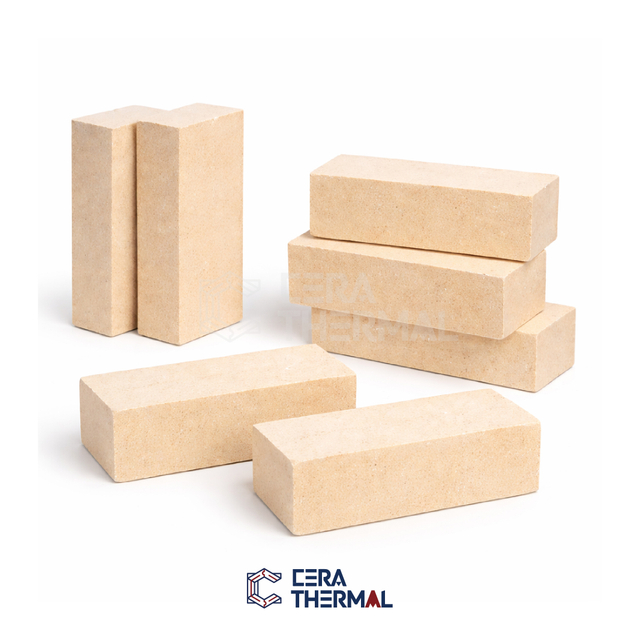
Chemical Thresholds Dictate Performance: Fireclay bricks typically contain less than 45% alumina (Al₂O₃), whereas high alumina bricks start at 48% and can exceed 80%, directly correlating to higher temperature thresholds and chemical resistance.
Mechanical Superiority: High alumina refractory products consistently deliver higher Cold Crushing Strength (CCS) and superior abrasion resistance, making them mandatory for high-friction zones.
Strategic Cost Allocation: While fireclay bricks offer a lower initial procurement cost, high alumina bricks provide a better ROI in extreme environments by extending maintenance cycles and reducing operational downtime.
Hybrid Lining Viability: The most cost-effective furnace designs utilize both materials—deploying high alumina in primary wear zones and fireclay in secondary or backup linings.
Table of Contents
Understanding the raw material inputs and firing processes is essential for predicting how a refractory block will behave under thermal stress. The mineralogical phases formed during manufacturing dictate the final physical properties of the brick. You cannot troubleshoot a lining failure without knowing exactly what is inside the masonry.
Fireclay bricks consist primarily of hydrated aluminum silicates. The alumina content in these bricks strictly ranges from 25% to 45%. The remaining composition is heavily dominated by silica (SiO₂), alongside trace amounts of iron oxide, titania, and alkali metals. Manufacturers produce these bricks by blending raw flint clay with calcined chamotte. This mixture undergoes high-pressure pressing and is subsequently fired in tunnel kilns at temperatures ranging between 1200°C and 1400°C.
During this firing process, the raw clay undergoes dehydration and phase transformation. A significant glassy phase develops, which binds the aggregate particles together. This glassy matrix provides standard fireclay with its general-purpose thermal properties but limits its maximum service temperature. When exposed to extreme heat, this glassy phase softens, leading to structural deformation. The silica content also makes the brick slightly acidic, which dictates its chemical resistance profile.
Engineers categorize fireclay products into two distinct functional groups. Dense fireclay bricks provide structural integrity, mechanical support, and direct heat resistance in moderate environments. Insulating fireclay bricks are engineered with high porosity. Manufacturers introduce combustible additives like sawdust or petroleum coke during mixing. These additives burn out during firing, leaving trapped air pockets. These highly porous bricks lack mechanical strength and are used strictly for thermal retention behind the working lining.
High alumina bricks utilize bauxite, sillimanite, or synthetic corundum as their primary aggregate base. To meet the classification standard, the alumina content must strictly exceed 48%. The industry further divides these bricks into three distinct grades based on their Al₂O₃ percentages. Grade III contains 48% to 60% alumina. Grade II ranges from 60% to 75%. Grade I exceeds 75% alumina, often utilizing pure fused alumina or tabular corundum for extreme applications like steel ladles and glass tank regenerators.
The higher concentration of alumina fundamentally alters the physical matrix of the brick. During firing, which requires elevated temperatures between 1400°C and 1600°C or higher, the raw materials form dense interlocking networks of mullite and corundum crystals. This crystalline structure minimizes the glassy phase, providing exceptional high-temperature stability and mechanical rigidity. The lack of a dominant glassy phase means the brick will not soften easily under load.
Similar to fireclay, high alumina products are manufactured in different densities. Heavy-duty high alumina bricks are engineered for maximum structural load, severe abrasion resistance, and direct flame impingement. Lightweight high alumina variants are engineered specifically for high-temperature insulation. These lightweight bricks withstand higher temperatures than insulating fireclay but still lack the mechanical strength required for working face applications.
Selecting the correct material requires analyzing specific thermomechanical metrics. A direct comparison of high alumina brick vs fireclay brick reveals distinct operational boundaries for each product. Field engineers rely on these metrics to predict campaign life.
Maximum service temperature defines the absolute limit a brick can withstand before melting. Fireclay bricks typically operate safely up to 1350°C or 1400°C. Pushing fireclay beyond this threshold causes rapid degradation. High alumina bricks, depending on their specific grade, can operate continuously at temperatures exceeding 1700°C.
Maximum service temperature alone is an incomplete metric. Refractoriness Under Load (RUL) provides a more accurate picture of real-world performance. RUL measures the temperature at which a refractory brick begins to deform while subjected to a constant compressive load, typically 0.2 MPa. Fireclay bricks exhibit lower RUL values. Because of their higher silica content and glassy phase, fireclay begins to soften and experience creep under heavy loads at peak temperatures. High alumina bricks maintain structural integrity at much higher temperatures. Their interlocking mullite and corundum network resists deformation, preventing the furnace lining from collapsing under its own weight.
Cold Crushing Strength (CCS) measures the ability of a brick to withstand compressive forces at room temperature. This metric is vital for evaluating transport durability, installation stability, and resistance to impact during maintenance tear-outs. High alumina refractory products consistently yield significantly higher CCS metrics than standard fireclay.
This mechanical superiority extends to operational abrasion resistance. In environments like rotary kilns or metallurgical furnaces, the refractory lining faces constant physical wear from raw materials, moving clinker, and scraping tools. The dense crystalline structure of high alumina bricks resists this physical scouring. Standard fireclay degrades rapidly when subjected to high-friction material flow, leading to premature lining wear and localized hot spots on the furnace shell.
Chemical erosion destroys refractory linings faster than pure heat. Analyzing the chemical neutrality of both bricks is essential for slag resistance. Fireclay bricks lean slightly acidic due to their silica content. They perform adequately in neutral or mildly acidic environments but suffer massive failure when exposed to highly alkaline environments or basic slags. The basic slag reacts violently with the silica, forming low-melting-point compounds that wash away the working face.
High alumina bricks offer superior chemical neutrality. As the alumina content increases, the brick becomes more amphoteric, meaning it can resist both acidic and basic attacks. This makes high alumina the mandatory choice for metallurgical and glass-melting applications where heavy slag attack is constant. The dense matrix of high alumina also prevents liquid slag from physically penetrating the brick structure, thereby reducing the rate of chemical erosion.
Heat transfer rates dictate the thermal efficiency of the furnace. Heavy-duty high alumina bricks possess high bulk density and low porosity. Consequently, they are highly thermally conductive. They transfer heat efficiently, making them poor insulators. If a furnace were lined entirely with dense high alumina bricks, the heat loss through the steel shell would be massive, driving up fuel consumption and potentially warping the steelwork.
Fireclay bricks, while still conductive in their dense form, transfer less heat than high alumina. To prevent heat loss, engineers utilize insulating firebricks and lightweight high-alumina bricks. These porous variants are installed directly against the steel shell. They trap heat inside the furnace, contrasting sharply with their dense, working-face counterparts that handle the direct thermal and mechanical abuse.
Apparent Porosity (AP) measures the volume of open pores within the brick. High porosity allows molten slag and corrosive gases to penetrate deep into the refractory lining. Once inside, these contaminants freeze during cooling cycles, causing the brick face to fracture and peel away. Dense high alumina bricks feature lower apparent porosity than standard fireclay, offering better resistance to slag penetration.
Thermal shock resistance presents a more complex dynamic. Rapid temperature cycling causes refractory materials to expand and contract. If a brick is too dense and rigid, this rapid cycling causes internal stress, leading to spalling. While high alumina bricks are denser, specific formulations containing specialized aggregates are required to prevent spalling. In lower-temperature applications with frequent heating and cooling cycles, high-quality fireclay sometimes offers competitive flexibility, absorbing thermal shock better than standard dense high alumina.
Engineers and installation crews must accurately identify materials on the job site to prevent disastrous installation errors. Visual and physical checks provide immediate verification before the mortar is mixed.
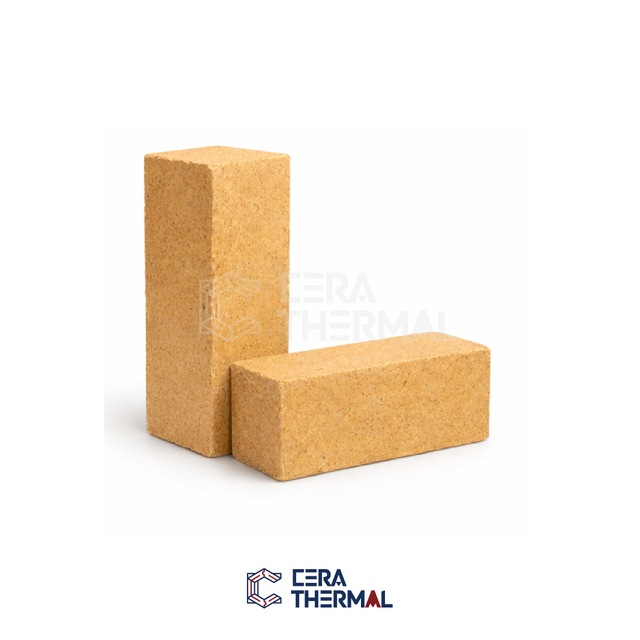
Check the color profile: Fireclay typically exhibits a yellowish, buff, or light brown color due to trace iron impurities. High alumina leans toward a whiter, grayer, or pale yellow hue, depending on the bauxite source and firing temperature.
Perform the acoustic hammer test: When you strike a high alumina brick with a masonry hammer, it produces a sharp, clear, metallic ring. This acoustic response results from its high bulk density and extreme firing temperature. Striking a standard fireclay brick produces a duller, flatter thud, indicating its lower density and higher glassy phase.
Measure the dry weight: High alumina bricks are noticeably heavier by volume. A quick manual lift test between two identically sized bricks will immediately reveal which one is the high alumina variant.
Inspect the pore structure: Examine the surface texture. Dense high alumina will have a tighter, more uniform crystalline face, whereas fireclay may show slight surface variations and a more porous appearance.
Table 1: Technical Comparison of Refractory Materials
Property | Fireclay Brick | High Alumina Brick |
|---|---|---|
Alumina Content (Al₂O₃) | 25% - 45% | 48% - 90%+ |
Max Service Temperature | Up to 1400°C | 1500°C - 1700°C+ |
Refractoriness Under Load (RUL) | Lower (Prone to high-temp creep) | Excellent (Maintains structural integrity) |
Abrasion Resistance | Moderate | High to Extreme |
Slag Resistance | Vulnerable to basic slags | Highly resistant to basic and acidic slags |
Acoustic Resonance | Dull thud | Sharp, metallic ring |
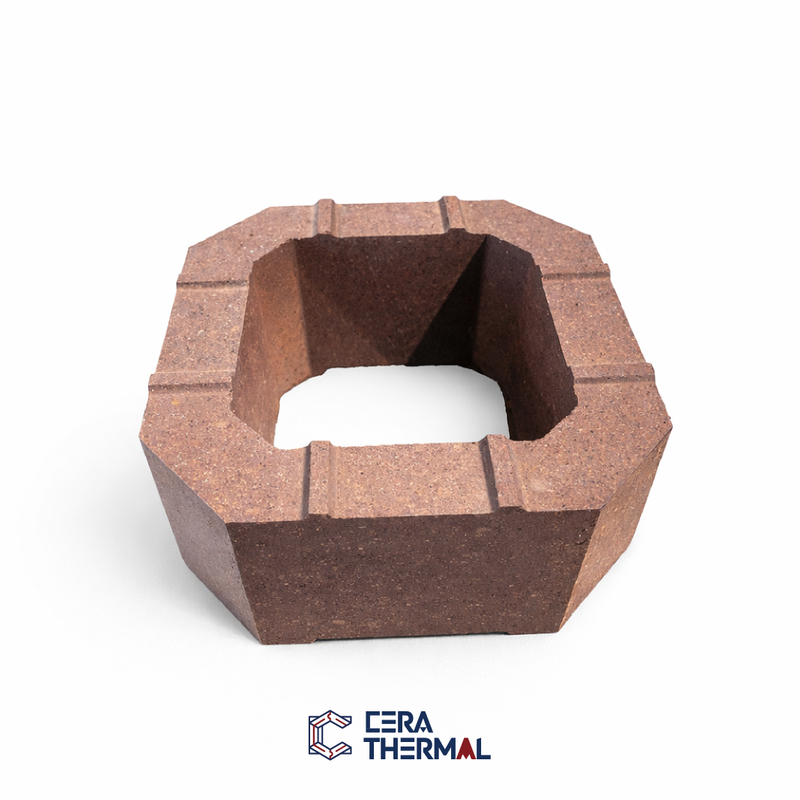
Refractory engineering relies on zoning. No single material is ideal for every section of an industrial furnace. Specifying the correct brick for the correct zone ensures operational stability and maximizes the lifespan of the entire asset.
Fireclay bricks excel in low-to-medium temperature applications where mechanical stress is minimal. They serve as the industry standard for backup linings, providing structural volume behind the working face. Common applications include boiler flues, carbon baking furnaces, blast furnace shafts, and municipal incinerators.
Engineers specify fireclay in zones where mechanical abrasion and chemical attacks are effectively non-existent. In these environments, the primary function of the brick is to contain moderate heat and provide a stable masonry foundation. Fireclay fulfills this role perfectly, offering reliable secondary thermal protection without over-engineering the lining.
High alumina bricks are deployed in severe-duty applications. These are the primary working linings exposed to extreme conditions. Typical deployment zones include the transition and burning zones in rotary cement kilns, electric arc furnace (EAF) roofs, steel ladles, and glass tank regenerators.
In these critical areas, the refractory must endure high load-bearing capacity at elevated temperatures. The lining is in direct contact with corrosive liquid slags, molten metals, and abrasive raw materials. High alumina provides the necessary refractoriness, chemical neutrality, and mechanical strength to survive these aggressive operational parameters.

The most effective refractory designs utilize a hybrid lining strategy. This framework combines both materials within a single asset to optimize the performance ratio. A uniform lining of high alumina is often thermally inefficient and structurally heavy. A uniform lining of fireclay will melt at the working face.
A standard hybrid configuration uses heavy-duty high alumina bricks for the hot face. This layer resists the intense heat, slag attack, and mechanical wear. Directly behind this working face, engineers install a safety lining of dense fireclay. Finally, against the steel shell, insulating fireclay bricks are laid to maximize thermal efficiency. This layered approach protects the steel shell, reduces heat loss, and ensures the expensive high alumina material is only used exactly where it is required.
Table 2: Industry-Specific Application Zones
Industry | Fireclay Application Zone | High Alumina Application Zone |
|---|---|---|
Cement Manufacturing | Preheater towers, drying zones, safety linings | Burning zone, transition zone, cooler bullnose |
Steel Production | Blast furnace upper shafts, backup linings | EAF roofs, steel ladles, torpedo cars |
Glass Melting | Regenerator lower checkerwork, flues | Regenerator upper checkerwork, port necks |
Power Generation | Ash hoppers, boiler walls, stack linings | Burner blocks, high-wear impact zones |
Evaluating refractory materials requires looking beyond the initial purchase order. The true value of a furnace lining is measured by its operational longevity and its impact on plant availability.
High alumina bricks carry a higher initial procurement cost compared to fireclay alternatives. The raw materials are more expensive to mine, and the manufacturing process requires significantly more energy to reach the 1600°C firing temperatures. However, evaluating these materials strictly on upfront cost is a flawed engineering practice.
In extreme environments, high alumina bricks provide a superior return on investment by extending the campaign life of the furnace. A fireclay lining in a high-wear zone might require replacement every six months. A properly specified high alumina lining in the same zone can last two years. The extended campaign life and reduced refractory consumption easily offset the initial capital expenditure.
The hidden costs of refractory failure far exceed the price of the bricks. When a furnace lining fails prematurely, the plant incurs massive financial penalties. These include lost production hours, emergency labor rates for tear-out crews, and the massive energy costs required to cool the furnace down and reheat it back to operating temperature.
Specifying high alumina in critical zones minimizes unplanned outages. It stabilizes the maintenance schedule, allowing plant managers to plan tear-outs during scheduled annual shutdowns rather than reacting to emergency hot spots on the furnace shell. Fireclay remains valuable for reducing the overall volume cost of the lining, but it must never be forced into a zone that dictates high alumina performance.
Executing a refractory installation requires careful attention to structural physics and material compatibility. Ignoring these engineering principles leads to lining failure during the initial heat-up phase, regardless of brick quality.
Heavy-duty high alumina bricks possess a significantly higher bulk density than standard fireclay. They are substantially heavier. Upgrading a furnace lining from fireclay to high alumina introduces a massive increase in dead weight.
This increased structural load poses a severe implementation risk. If the furnace shell, trunnions, or support steelwork are not rated for this additional weight, the structural integrity of the entire asset is compromised. Mitigation requires a thorough structural engineering review. Before upgrading the working lining, engineers must calculate the new dead load and ensure the existing steel shell and support structures can safely handle the increased weight.
Refractory bricks require specialized mortars to bind the joints. A common and disastrous error is using incompatible refractory mortars. Fireclay and high alumina possess different coefficients of thermal expansion. They expand at different rates when heated.
If an installation crew uses a standard fireclay mortar to bind high-alumina bricks, the mortar will shrink or melt while the bricks expand. This thermal expansion mismatch destroys the masonry joints. The joints open up, allowing molten slag and corrosive gases to penetrate behind the working lining, leading to localized shell failure and heat leaks. Mitigation is straightforward: always specify matching high-alumina mortars for high-alumina bricks, and fireclay mortars for fireclay bricks. Ensuring uniform thermal expansion coefficients prevents joint failure and maintains a monolithic protective barrier.
Follow these strict mortar application steps during installation:
Match the mortar composition: Verify the alumina content of the mortar matches or slightly exceeds the alumina content of the brick.
Mix to the correct consistency: Use clean water and mix until the mortar reaches a smooth, trowelable consistency without dry lumps.
Maintain tight joint thicknesses: Keep mortar joints between 1mm and 2mm thick. Thick joints are weak points susceptible to slag attack.
Allow for proper thermal expansion gaps: Calculate the total expansion of the masonry wall and leave engineered gaps filled with combustible material to absorb the growth during heat-up.
Once the hybrid lining is installed, the furnace cannot be immediately fired to operating temperature. Both the bricks and the mortar contain mechanical and chemically bound water. Heating the furnace too quickly causes this water to flash into steam. The resulting internal pressure will blow the face off the bricks, a failure known as steam spalling.
Because high alumina bricks are denser and less porous than fireclay, steam struggles to escape from the matrix. Engineers must design a conservative heat-up curve that accommodates the densest material in the lining. The temperature must be raised slowly, with specific hold times at 150°C, 300°C, and 600°C to allow all moisture to vent safely before pushing the furnace to its maximum service temperature.
Fireclay bricks remain the industry standard for general-purpose thermal protection in low-stress environments. They provide reliable structural volume and secondary insulation. High alumina bricks are absolutely non-negotiable for high-temperature, high-abrasion, and chemically aggressive zones. Attempting to substitute fireclay into a severe-duty zone guarantees premature failure.
Base your final material decision on three verified operational parameters. First, determine the maximum continuous operating temperature of the specific furnace zone. Second, analyze the chemical composition and basicity of the slag or product contacting the lining. Third, calculate the mechanical load and abrasion requirements.
To ensure operational reliability, take the following next steps:
Conduct a localized thermal audit of your kiln or furnace to identify exact temperature profiles across different zones.
Consult with a specialized refractory engineer to design a layered, hybrid lining strategy that optimizes material placement.
Request comprehensive technical data sheets (TDS) from manufacturers to verify Al₂O₃ content, Cold Crushing Strength, and Refractoriness Under Load before finalizing procurement.
Inspect the structural steelwork to confirm load-bearing capacity if upgrading to higher-density materials.
For industrial projects requiring more than standard refractory material selection, working with an experienced supplier can help align material properties, lining design, and actual furnace operating conditions. Founded in Nanjing in 2002, CERA THERMAL has developed into a global refractory and high-temperature insulation solution provider integrating material R&D, manufacturing, processing, engineering application, and international services, with solutions tailored to temperature profiles, chemical environments, mechanical conditions, and lifecycle performance requirements.
A: A refractory brick must contain a minimum of 48% alumina (Al₂O₃) to be classified as high alumina. Fireclay bricks typically fall below 45% alumina. This 48% threshold marks the critical transition in mineralogical classification, where the formation of mullite and corundum phases significantly enhances high-temperature stability.
A: Heavy-duty variants possess high bulk density and are engineered for structural integrity, mechanical load-bearing, and severe wear resistance at the working face. Lightweight variants are highly porous and lack mechanical strength. They are used strictly as backup thermal insulation to prevent heat loss through the furnace shell.
A: Yes, but only in specific zones. Fireclay bricks are highly effective in the preheating zones, drying zones, or as a backup safety lining. They cannot be used in the burning or transition zones, where extreme temperatures and chemical attacks require high alumina or basic refractory bricks.
A: High alumina bricks have a higher bulk density due to their raw materials, such as bauxite and corundum, which are naturally denser than standard clays. Additionally, the extreme firing temperatures used during manufacturing eliminate open pores and create a tightly packed, heavy crystalline matrix.
A: Fireclay contains high silica, making it slightly acidic and highly vulnerable to chemical attack from basic slags like lime or magnesia. High alumina bricks are more chemically neutral. They offer far superior resistance to basic slags, preventing rapid chemical erosion of the working lining.
A: The materials have different thermal expansion coefficients. During heat-up, the fireclay mortar will shrink or melt while the high alumina bricks expand. This mismatch destroys the masonry joints, allowing molten slag and corrosive gases to penetrate the lining and attack the steel shell.