

close
Choose Your Site
Global
Social Media
Furnace and kiln lining failures carry severe operational consequences. When a lining degrades prematurely, facilities face catastrophic downtime, immediate safety hazards for personnel, and compounding energy losses due to escaping heat. The core engineering problem centers on balancing installation speed with operational longevity. Plant managers must decide between monolithic linings and traditional masonry. This decision dictates thermal efficiency, maintenance schedules, and long-term mechanical stability. You need materials that withstand aggressive thermal cycling without cracking under pressure.
Choosing the right material requires a technical, evidence-based evaluation of your specific heat zones. We will analyze refractory castable vs refractory brick across thermal performance, installation mechanics, and operational durability. This comparison will help you determine the optimal lining strategy for specific industrial applications, ensuring your furnace stays online and operates at peak efficiency.
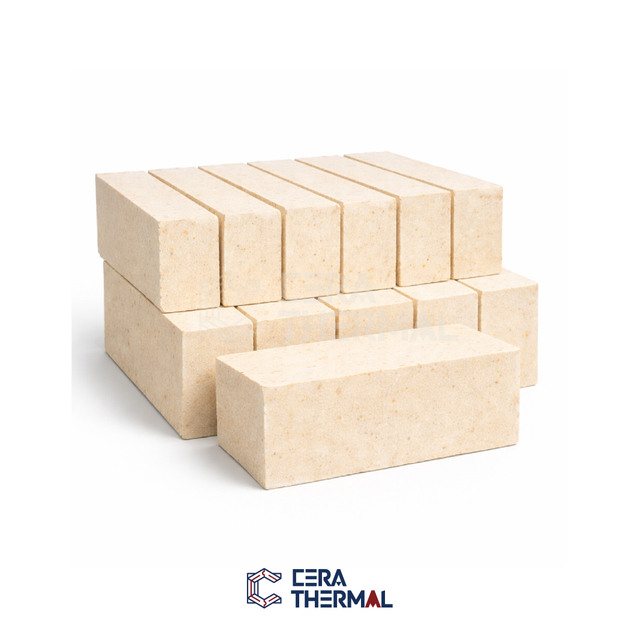
Joint Elimination: Castable refractories create a monolithic structure that eliminates mortar joints—the primary weak point and most common failure origin in traditional furnace linings.
Structural Predictability & Density: Refractory bricks offer immediate structural stability, higher density, and predictable thermal conductivity without the stringent on-site mixing and curing requirements of castables.
Installation & Downtime: Castables install faster for complex geometries (roofs, domes), while bricks allow for faster heat-up times since they do not require a prolonged dry-out phase.
Thermal Conductivity Trade-offs: The higher density of refractory bricks generally results in higher thermal conductivity, often requiring secondary insulation layers, whereas castables can be engineered for specific heat absorption and retention profiles.
Hybrid Optimization: The most resilient furnace designs often utilize a hybrid approach, deploying high-density fire bricks in high-abrasion zones and castables in complex or hard-to-reach areas.
Table of Contents
Evaluating furnace linings begins with defining strict operational parameters. Peak continuous temperatures dictate the baseline material grade required, but thermal cycling frequency often determines the actual lifespan of the refractory. Furnaces, kilns, and reactors undergo massive expansion and contraction during heat-up and cool-down phases. Materials must possess adequate thermal shock resistance to endure these fluctuations without cracking.
Heat retention requirements also play a critical role in material selection. Processes requiring stable internal temperatures demand materials with specific thermal mass and insulation properties. For example, an aluminum reverberatory furnace requires a lining that holds heat efficiently to keep the metal bath molten, whereas a periodic kiln needs a lining that can heat up and cool down rapidly without absorbing too much energy. You must map out the exact temperature profile of your equipment before selecting a refractory system.
Refractory linings rarely fail from heat alone. Mechanical wear and chemical degradation drive the majority of premature replacements. Facilities must evaluate materials based on their resistance to abrasion from raw material charging, particulate-laden exhaust gases, and physical impact. When heavy scrap metal drops into a furnace hearth, the lining must absorb that kinetic energy without shattering.
Chemical attack presents another severe threat to lining integrity. Slag penetration, alkali attacks, and corrosive gases alter the chemical composition of the refractory lining. When acidic slag reacts with a basic refractory, it lowers the melting point of the hot face, causing the material to wash away into the melt. The chosen material must offer a chemical profile compatible with the specific process environment. You cannot use a silica-based refractory in an environment dominated by basic slags, regardless of its temperature rating.
The availability of specialized labor directly impacts the feasibility of any refractory installation. Traditional masonry requires highly skilled refractory bricklayers capable of maintaining tight mortar joints and calculating complex expansion allowances. These tradesmen are becoming increasingly difficult to source for short-notice emergency repairs.
Conversely, monolithic installations rely on formwork carpenters and casting crews familiar with mixing and vibration techniques. While this labor pool is generally larger, the installation process requires strict supervision to ensure proper water ratios and consolidation. Facility managers must weigh the availability of these specific labor pools against strict downtime constraints. Faster installation methods may offset higher material costs by returning the unit to production days or weeks earlier.
Common Furnace Operating Parameters and Wear Factors
Operating Zone | Primary Wear Mechanism | Secondary Wear Mechanism |
|---|---|---|
Rotary Kiln Burner Zone | Extreme Thermal Shock | Chemical Attack (Alkali) |
Furnace Hearth | Mechanical Impact | Slag Pooling |
Suspended Roof | Gravity / Structural Stress | Gas Erosion |
Exhaust Flue | Particulate Abrasion | Acidic Gas Condensation |
Castable refractories consist of precisely graded refractory aggregates, specialized binders, and additives formulated for on-site mixing with water. The chemical makeup varies widely based on application requirements. High alumina castables provide exceptional refractoriness and slag resistance, making them suitable for extreme environments like steel ladles and cement kiln hoods.
Modern formulations heavily utilize low cement (LCC) or ultra-low cement (ULCC) technologies. Reducing the calcium aluminate cement content lowers the amount of calcium oxide in the matrix. This significantly improves high-temperature strength and resistance to chemical attack, as calcium oxide tends to form low-melting phases when exposed to certain slags. Insulating formulations incorporate lightweight aggregates like vermiculite, perlite, or bubble alumina to prioritize thermal resistance over mechanical strength.
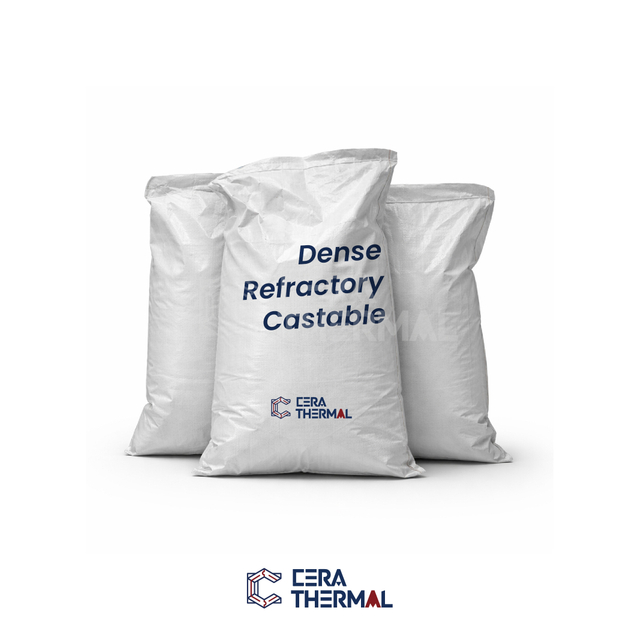
The primary structural advantage of castable refractory lies in its monolithic nature. By eliminating mortar joints, castables remove the most vulnerable pathways for gas and slag penetration. In traditional brickwork, joints often erode first. This allows slag to freeze behind the hot face, expand, and cause mechanical spalling. A jointless lining drastically reduces these maintenance interventions.
Furthermore, castables excel in forming complex shapes. Inner domes, burner blocks, and suspended roofs require intricate geometries. Pouring or pumping castable into custom formwork ensures structural integrity without the need to cut individual bricks. Cutting bricks exposes their porous interior and compromises their mechanical strength. With castables, you simply build the form, install the stainless steel V-anchors, and pour the material to the exact dimensions required.
Despite their operational advantages, castables introduce significant installation risks. Success depends entirely on strict environmental and procedural controls. Water-to-solids ratios must remain exact. Excess water creates high porosity and lowers final strength, while insufficient water prevents proper compaction and leaves voids in the lining. Ambient temperatures during installation dictate curing times and binder hydration.
The most critical risk occurs during the dry-out phase. Castables contain both mechanical water and chemical water of hydration. Rushing the heat-up schedule causes trapped water to rapidly convert to steam. If the steam pressure exceeds the tensile strength of the material, explosive spalling occurs. This destroys the lining before the furnace ever reaches production capacity.
Standard dry-out procedures typically follow these steps:
Air curing at ambient temperature for 24 to 48 hours to allow initial binder hydration.
Slow heating to 110°C (230°F) and holding to drive off free mechanical water.
Ramping up to 300°C - 400°C (570°F - 750°F) to release chemically bound water.
Final ramp to operating temperature to achieve full ceramic bonding.
Refractory bricks undergo a rigorous, factory-controlled manufacturing process long before reaching the job site. Manufacturers blend raw materials, press them under extreme hydraulic pressure, and fire them in tunnel kilns at temperatures exceeding their intended application environment. This process ensures consistent density, controlled porosity, and verified structural strength.
Standard fire bricks typically consist of fireclay and serve well in moderate temperature zones where extreme chemical attack is not a factor. Specialized high-alumina refractory bricks, engineered with bauxite, mullite, or corundum, handle extreme thermal shock, heavy mechanical loads, and aggressive chemical environments. Because the firing happens in a controlled factory setting, the physical properties of the brick are guaranteed upon delivery.
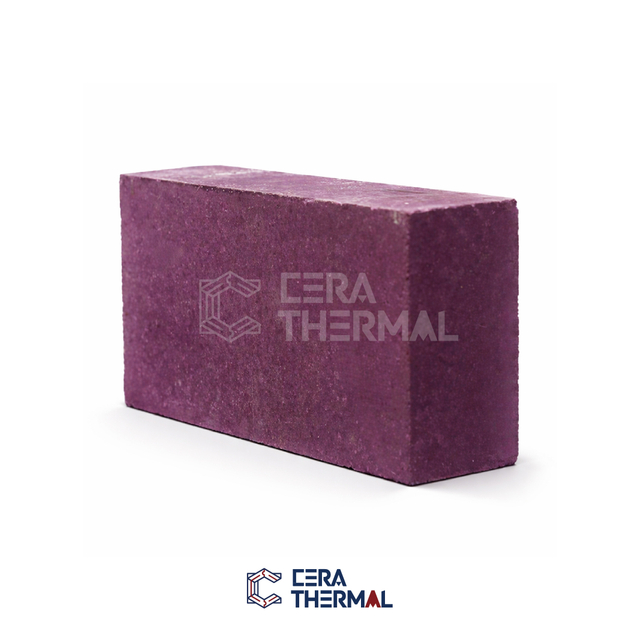
The defining advantage of refractory brick is immediate mechanical strength. Because the ceramic bond forms during factory firing, bricks arrive on-site ready to bear structural loads instantly. This predictability eliminates the variables associated with on-site mixing, vibration, and curing. You know exactly what compressive strength you are putting into the furnace.
Operationally, brick linings offer a massive advantage in commissioning speed. Since the material contains no free water, facilities can skip the lengthy, multi-day dry-out schedules required for castables. Furnaces can return to service rapidly following a repair. You simply lay the brick, allow the thin mortar joints to set, and begin the heat-up process. This minimizes lost production time and gets the plant back online faster.
Traditional masonry introduces inherent vulnerabilities through mortar joints. Even with high-quality refractory mortar, joints remain susceptible to thermal expansion, contraction, and chemical attack. Slag easily penetrates these seams, leading to accelerated wear. Mitigating this risk requires highly skilled refractory masons who can maintain joint thicknesses of two millimeters or less while properly calculating expansion gaps using ceramic fiber paper.
Additionally, the high density achieved during factory pressing results in higher thermal conductivity. Dense refractory bricks transfer heat outward rapidly. Without secondary backing insulation, a solid brick lining can lead to severe energy loss and dangerously high cold-face temperatures on the furnace shell. You must engineer a multi-layer lining system, typically utilizing dense firebrick on the hot face backed by insulating firebrick (IFB) or microporous insulation boards against the steel shell.
Thermal performance dictates energy efficiency and process stability. Castables can be engineered with specific aggregate blends to absorb and hold heat, making them highly effective in inner domes and radiant zones. Their thermal resistance remains customizable. Insulating castables block heat transfer effectively but sacrifice abrasion resistance. You can pour a dual-layer lining with a dense castable hot face and a lightweight castable backup layer in a single continuous operation.
Conversely, dense refractory bricks transfer heat outward more aggressively due to their low porosity. When comparing high alumina castables against high alumina bricks, both withstand rapid thermal cycling. However, the monolithic nature of the castable often prevents the localized thermal stress concentrations that cause brick joints to crack. Bricks require carefully engineered expansion joints to accommodate thermal growth, whereas castables distribute thermal stresses more evenly across the monolithic structure.
Installation logistics vary drastically between the two methods. Castable installation requires building robust formwork, staging heavy mixing equipment, and executing continuous pours or pump operations. For large, unobstructed volumes, pumping castable proves significantly faster than laying brick. A skilled crew can pump dozens of tons of castable in a single shift, rapidly forming thick walls and hearths.
Traditional masonry requires no formwork. Masons cut and lay individual bricks, a labor-intensive process that demands precision. Facility layout heavily influences this dynamic. Tight access points may prohibit large castable mixing setups, making pre-packaged bricks the faster, more practical option. If you are repairing a small section of a wall, carrying in a pallet of bricks is far easier than mobilizing a mixer, water supply, and formwork lumber.
Long-term degradation patterns differ fundamentally. Masonry structures typically fail at the joints, leading to localized brick loss. Repairing brickwork involves tearing out the damaged section, cleaning the surrounding area, and keying in new bricks. This is a time-consuming process that often requires specialized shoring to support the surrounding structure while the repair takes place.
Monolithic structures degrade more uniformly. When a castable lining spalls or wears thin, maintenance crews can often patch the area using gunning or ramming techniques without dismantling the entire structural section. The reduction of joints in castable linings directly lowers the frequency of ongoing maintenance interventions. You spend less time chasing localized joint failures and more time running the furnace.
Evaluating the financial impact requires looking beyond the initial purchase order. Upfront material costs per cubic meter generally favor standard fire bricks, though high-alumina castables and specialized bricks carry premium price tags. However, long-term financial impact encompasses labor rates, expected lifespan, maintenance intervals, and the cost of lost production during installation and repair.
A cheaper brick installation may require frequent joint maintenance, negating the initial savings. Conversely, a premium castable lining may cost more upfront and require a longer initial dry-out, but its extended maintenance-free lifespan often yields better financial performance over a multi-year operational cycle. You must calculate the cost of downtime for your specific facility to determine which material makes the most financial sense.
Material Comparison Summary
Feature | Refractory Castable | Refractory Brick |
|---|---|---|
Installation Method | Pouring, pumping, or gunning into formwork | Manual laying with refractory mortar |
Joints | Monolithic (Seamless) | Multiple mortar joints |
Dry-Out Requirement | Strict, multi-day schedule required | Minimal to none; immediate heat-up possible |
Structural Strength | Develops after curing and firing on-site | Pre-fired in factory; immediate load-bearing |
Complex Geometries | Excellent; easily conforms to any shape | Poor; requires extensive custom cutting |
Gravity presents a constant challenge for overhead refractory structures. Castable refractory serves as the preferred material for suspended roofs and inner domes. The monolithic structure eliminates gravity-stressed joints that frequently cause brick roofs to collapse. You anchor the castable directly to the overhead steel structure using heavy-duty metallic hangers, creating a secure, jointless ceiling.
Forming a dome with castable avoids the complex, precise brick-cutting required to build a self-supporting arch. Contractors often attempt to substitute firebrick for castable in capstones to save time on formwork. Opting out of castable for capstones introduces structural vulnerabilities. The intricate cuts weaken the bricks and create numerous pathways for heat escape and mechanical failure. Stick to castables for overhead and complex geometries.

Lower sidewalls, hearths, and slag lines endure the most brutal operational conditions. Dense refractory bricks remain the standard for these zones. The factory-pressed density provides unmatched resistance to mechanical impact from charging materials. When a loader dumps scrap into the furnace, dense brick absorbs the impact better than a cast matrix.
Furthermore, dense bricks resist slag pooling and abrasion far better than most castables. In these high-wear areas, the immediate structural stability and predictable wear patterns of brick outweigh the jointless advantages of castables. You can easily replace a sacrificial wear course of brick on a hearth without disturbing the underlying safety lining.
The most resilient and efficient furnace linings rarely rely on a single material. Engineered solutions frequently combine both methods to maximize longevity. A common hybrid design utilizes high-density refractory brick walls to provide structural support and resist mechanical abrasion at the charge level.
Above this zone, engineers deploy a castable roof or dome to ensure thermal efficiency, eliminate overhead joints, and simplify the construction of burner penetrations. This targeted application leverages the strengths of both materials while mitigating their respective weaknesses. You get the impact resistance of brick where the metal hits, and the jointless thermal efficiency of castable where the heat rises.
Conduct a comprehensive thermal and mechanical audit of your furnace to identify specific wear zones, temperature profiles, and chemical attack vectors.
Consult with a refractory engineer to map out zonal requirements, determining exactly where high-density bricks or monolithic castables are necessary.
Evaluate your facility's downtime constraints to decide if you can accommodate a strict castable dry-out schedule or if immediate brick commissioning is required.
Review contractor capabilities and local labor availability to ensure your chosen installation method can be executed precisely and safely.
About CERA THERMAL
For industrial facilities seeking application-specific refractory solutions, CERA THERMAL brings more than two decades of experience in refractory and high-temperature insulation materials, covering R&D, manufacturing, engineering applications, and international project support. Its refractory bricks, castables, ceramic fiber materials, and integrated furnace lining solutions support a wide range of temperature, chemical exposure, mechanical wear, and installation requirements.
A: Lifespan depends on operational conditions. Castables often last longer in static, high-heat environments due to the absence of vulnerable mortar joints. Refractory bricks typically outlast castables in high-abrasion zones or areas subjected to heavy mechanical impact. Proper installation and maintenance dictate the final lifespan of either material.
A: While possible, substituting firebrick for a capstone requires extensive custom cutting. This weakens the individual bricks and creates numerous mortar joints. These joints are highly susceptible to thermal expansion and gas penetration, significantly increasing the risk of structural failure compared to a monolithic castable capstone.
A: High alumina formulations in both materials offer excellent thermal shock resistance. However, castables generally handle rapid thermal cycling better because they lack mortar joints. Joints in brickwork create localized stress points that can crack during sudden expansion or contraction.
A: Castables install faster in large volumes or complex shapes via pumping, but require a lengthy, controlled dry-out period before operation. Bricks require labor-intensive, precise manual laying but need virtually no dry-out time, allowing for much faster furnace heat-up and return to service.
A: Mortar joints are the weakest point in masonry. They are susceptible to chemical attack, slag penetration, and thermal stress. When slag enters a joint and freezes, it expands, causing the face of the surrounding bricks to spall off and accelerating the degradation of the lining.
A: Neither is strictly better; they serve different purposes. High alumina castables are superior for complex geometries and eliminating joints to prevent gas leaks. High alumina bricks are better for load-bearing applications and resisting severe mechanical abrasion at the hearth or lower sidewalls.
A: Higher density means less internal porosity, which allows heat to transfer through the material more rapidly. Because dense refractory bricks have high thermal conductivity, they often require a secondary layer of insulating firebrick or ceramic board behind them to prevent excessive heat loss.


